
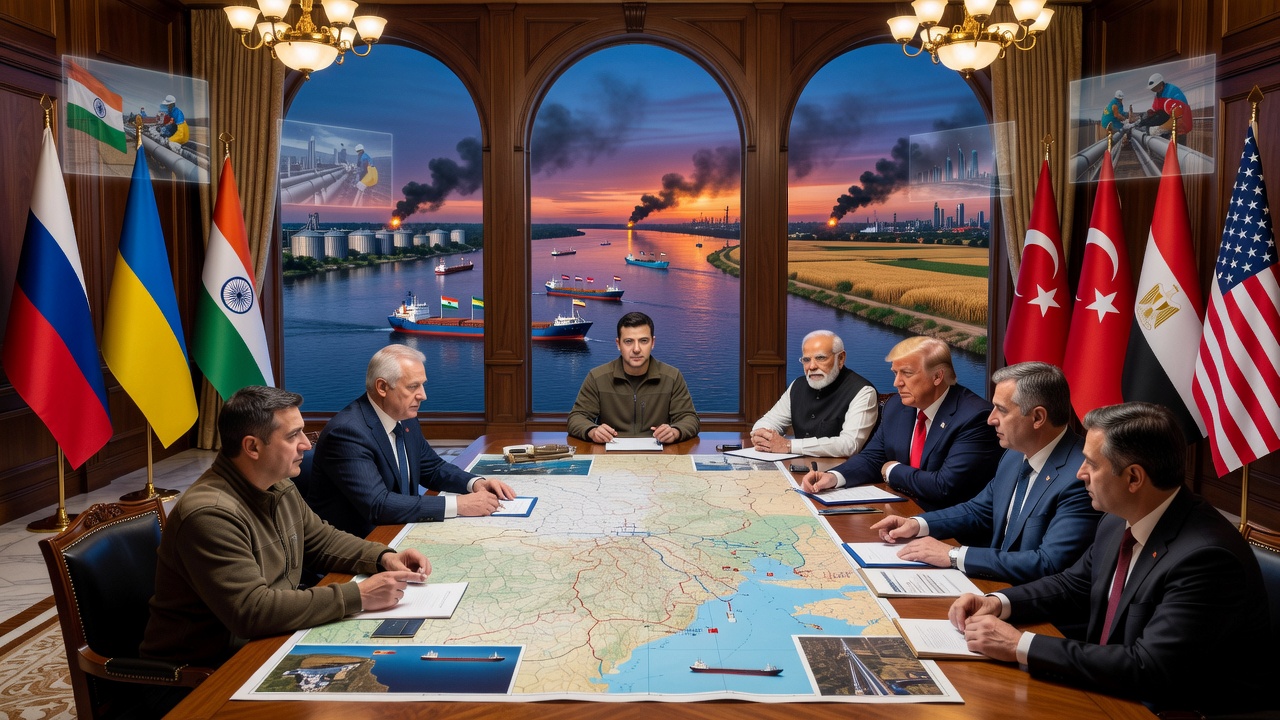
Kyiv has confirmed that India, Turkiye, Egypt and the United States have each put forward proposals aimed at brokering limited de-escalation with Russia, as the war grinds into its fifth year. None of the four plans attempts to end the conflict outright. Instead, each targets a narrower objective: halting strikes on energy infrastructure, securing Black Sea shipping routes, or restarting grain export corridors that have been disrupted since the war began.
Why a Narrow Truce, Not a Peace Deal
Ukrainian Foreign Minister Andrii Sybiha disclosed the four offers at a Kyiv briefing, describing India's as the most comprehensive and noting that New Delhi had signalled, for the first time, a willingness to take on a mediating role. According to reporting from Indian outlets, India's plan has three components: protecting energy and port infrastructure, keeping grain and energy supplies flowing through the Black Sea, and safeguarding commercial shipping and its crews. The last point carries particular weight for New Delhi, given that Indian sailors have been killed or injured on Black Sea routes in recent months.
Turkiye and Egypt's proposals remain largely undisclosed, but both appear to centre on suspending attacks on commercial vessels to keep grain moving. Turkiye has done this before, having helped broker the 2022 Black Sea Grain Initiative alongside the United Nations before Russia withdrew from it in 2023. Ankara and the UN are reportedly organising a fresh round of Black Sea talks for October.
Washington's Parallel Track
The US proposal, as described by Ukrainian President Volodymyr Zelenskyy, involves three steps: a mutual halt to energy strikes, reopening the grain corridor, and a trilateral meeting between Washington, Kyiv and Moscow, possibly in Abu Dhabi. That meeting has already slipped from an early-October target to late October, with people close to the talks attributing the delay to Russia.
Washington is simultaneously applying economic pressure while pursuing diplomacy. Donald Trump has signed legislation granting sweeping powers to sanction buyers of Russian energy, even as he has publicly pressed Ukraine to stop striking Russian diesel facilities, citing fuel-price concerns ahead of US midterm elections. Reports suggest Trump himself doubts Putin would accept an energy truce before winter.
Why Energy and Grain Have Become Global Flashpoints
This is not simply a regional dispute. Russia and Ukraine together account for more than a quarter of global wheat shipments, and attacks on port infrastructure pushed wheat futures to a three-year high in August. Sailors from unrelated countries have died in the crossfire: at least five Indian and seven Azerbaijani crew members have been killed since June, and a Russian strike on a Liberian-flagged ship in the Odesa region killed another crew member.
The energy dimension is comparable in scale. Ukraine says it has carried out more than 194 drone strikes on Russian refineries this year, hitting all 11 of the country's largest facilities, with one estimate putting the resulting drop in Russian fuel output above 30 percent. Combined with reduced Middle East supply following the US-Israel conflict with Iran, global diesel markets are increasingly exposed to disruptions in Russian output - a dynamic analysts say is driving renewed diplomatic urgency as much as grain security.
Deep Scepticism Persists
Russia's public tone has been conciliatory without commitment. The Kremlin has said it would welcome India's peace efforts, and Putin has praised what he called Prime Minister Modi's "very good ideas," without elaborating. Privately, however, a Ukrainian official told reporters that Moscow has rejected India's proposal, and Ukraine's agriculture minister said Russia has turned down every Black Sea ceasefire option presented so far.
Analysts remain doubtful any of the four initiatives will shift Moscow's calculus. Fredrik Wesslau of the European Council on Foreign Relations argues Russia is using the winter months to pressure Ukraine's economy rather than negotiate in good faith, while Maximilian Hess of the Foreign Policy Research Institute notes that Russia's territorial demands have only hardened since the invasion began. Both suggest that only sustained economic pressure - closing off Russia's shadow fleet of oil tankers, or China reducing its purchases of Russian crude - is likely to alter Moscow's position. Neither outcome looks imminent.