
Sports betting has grown far beyond simply picking a winner. Markets such as over/under, handicap, and both teams to score now dominate betting slips across football and other sports, reshaping how operators present odds and how bettors interpret risk. Understanding the mechanics behind these markets matters more than ever, particularly as betting products become more complex and more heavily marketed.
Totals Markets and the Appeal of Over/Under
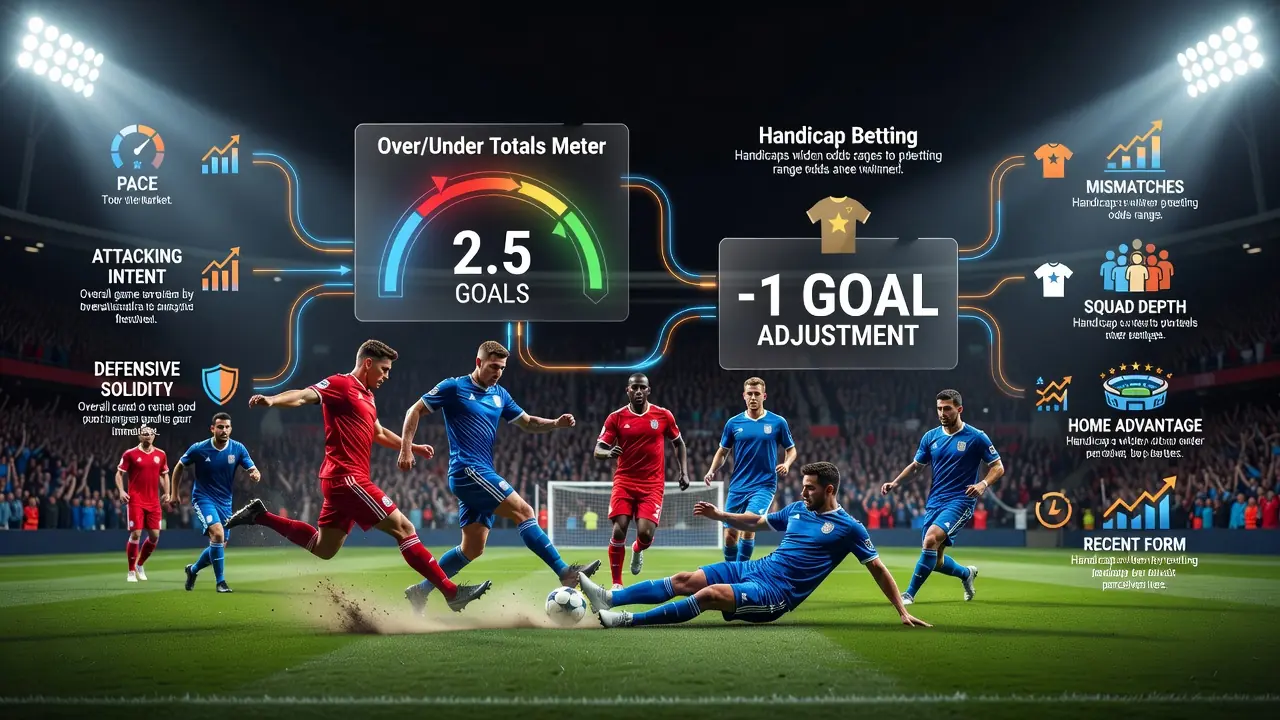
Over/under betting, known as totals, asks bettors to judge the combined output of a match rather than its outcome. A bookmaker sets a line - say, 2.5 goals in football - and bettors wager on whether the final tally will land above or below that number. The appeal lies in its neutrality: no team allegiance required, just an assessment of pace, attacking intent, and defensive solidity. This makes totals popular among bettors who track statistical trends like scoring averages, injury lists, and tactical setups, rather than following a single club closely.
Handicap Betting as a Risk-Balancing Tool
Handicap markets exist because mismatches are common in professional sport. When one side is a heavy favorite, straight win/lose odds offer little value. A handicap - for instance, a -1 goal adjustment for the stronger team - forces bettors to weigh not just who wins, but by how much. This structure increases the complexity of the bet but also widens the range of available odds, which is part of why operators promote handicap lines heavily in major leagues. It rewards bettors who study squad depth, home advantage, and recent form rather than relying on reputation alone.
Both Teams to Score and the Limits of Attacking Form
The BTTS market simplifies the question to a yes-or-no proposition: will both sides find the net? It sounds straightforward, but outcomes often hinge on defensive data as much as attacking statistics. A team with prolific strikers can still be shut out by a well-organized defense, which is why head-to-head history and tactical context carry weight in this market. BTTS has become a staple for bettors who prefer binary outcomes over numerical precision, though it carries the same uncertainty as any wagering product tied to live sporting performance.
Research, Bankroll Limits, and Platform Comparison
None of these markets reward guesswork over discipline. Comparing odds across licensed operators, tracking bet history, and setting firm spending limits are standard practices among experienced bettors - not shortcuts to guaranteed results, but ways to manage exposure in a product built on uncertainty. Live or in-play betting adds another layer of immediacy, letting odds shift as match conditions change, which can heighten both engagement and risk.
- Over/under focuses on total match output rather than a winning side.
- Handicap betting adjusts for skill gaps between competing teams.
- BTTS depends on both attacking and defensive performance.
- Bankroll management and odds comparison remain central to responsible participation.
These markets illustrate how modern betting products are designed around statistical nuance rather than simple prediction. That complexity can deepen engagement, but it also underscores why informed, measured participation - not confidence in any single system - defines sustainable betting behavior.