
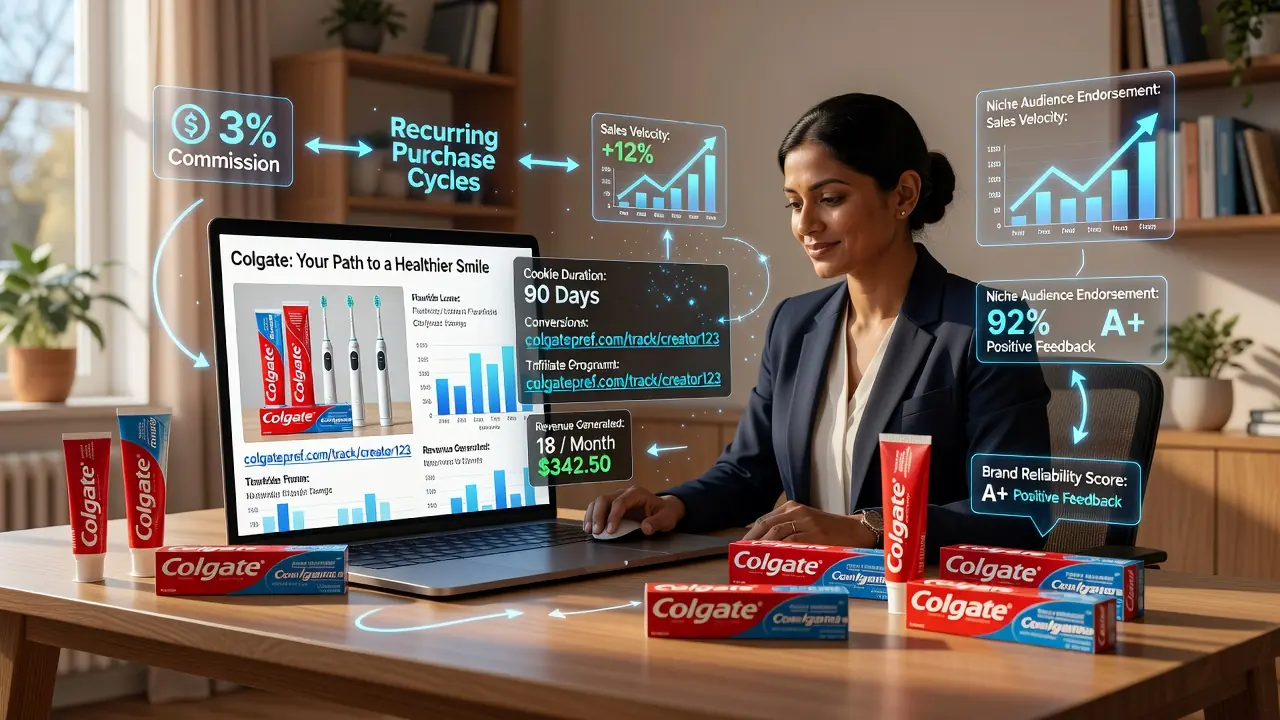
A household name in oral care has quietly become a case study in how legacy consumer brands monetize trust through affiliate marketing. The Colgate Preferred program, which pays content creators a commission for driving product sales, illustrates a broader shift in how established manufacturers reach shoppers who increasingly research purchases through blogs, comparison sites, and niche publishers rather than television advertising.
What the Program Actually Offers
Colgate Preferred operates on a straightforward affiliate model: publishers apply, get approved, and receive a unique tracking link to place within relevant content. When a reader clicks that link and completes a purchase, the affiliate earns a percentage of the sale - in this case, a 3% commission rate. That figure sits on the lower end compared with some digital subscription or software affiliate programs, which often pay double-digit percentages, but it reflects the realities of the consumer packaged goods category, where margins are thin and purchase prices are modest. A tube of toothpaste or a pack of toothbrushes simply doesn't generate the commission dollars that a $200 software subscription does, even at a higher percentage rate.
Why Cookie Duration and Niche Authority Matter More Than the Headline Rate
In affiliate marketing, the commission percentage is only part of the equation. Cookie duration - the window during which a click can still be credited to an affiliate if the customer later buys - plays an outsized role in programs like this one. Hygiene and personal care products are often bought on a recurring, habitual basis rather than researched extensively before a single purchase, so a longer cookie window increases the odds that a casual click eventually converts into a paid commission, sometimes across multiple purchase cycles.
This is also why niche relevance matters. A dental or personal care blog that already discusses oral hygiene, product comparisons, or health routines has a natural, credible context for recommending Colgate products. Publishers without that existing audience trust tend to see lower conversion rates, regardless of commission structure.
The Business Logic Behind Brand Affiliate Programs
For a company the size of Colgate, affiliate partnerships serve a function closer to distributed word-of-mouth marketing than direct advertising. Rather than paying a fixed fee for impressions or clicks, the brand only pays when a sale actually happens - shifting much of the financial risk onto the affiliate, who invests time in content creation without any guarantee of payment. This performance-based structure explains why affiliate commissions in consumer goods tend to stay modest: the brand is compensating for conversion, not exposure.
Tools that aggregate affiliate link performance across multiple programs have become common among publishers precisely because tracking clicks, conversions, and earnings manually across dozens of brand partnerships is impractical. These platforms don't change the underlying economics of a given program, but they help affiliates identify which content formats and placements actually drive revenue.
What Readers and Aspiring Affiliates Should Keep in Mind
- Affiliate income from consumer goods programs is typically modest per sale and depends heavily on traffic volume.
- Reversed commissions can occur when a sale is later refunded or cancelled, a standard industry practice rather than something specific to Colgate.
- Transparency matters: readers deserve to know when a blog post contains affiliate links, and reputable publishers disclose this clearly.
- Building a sustainable affiliate business generally requires an owned platform - a website or blog - rather than relying solely on social media, since algorithm-dependent channels offer less control over long-term audience reach.
None of this guarantees income for any publisher who signs up. Affiliate marketing, like any performance-based business model, rewards sustained content quality, audience trust, and consistent traffic - not shortcuts.