
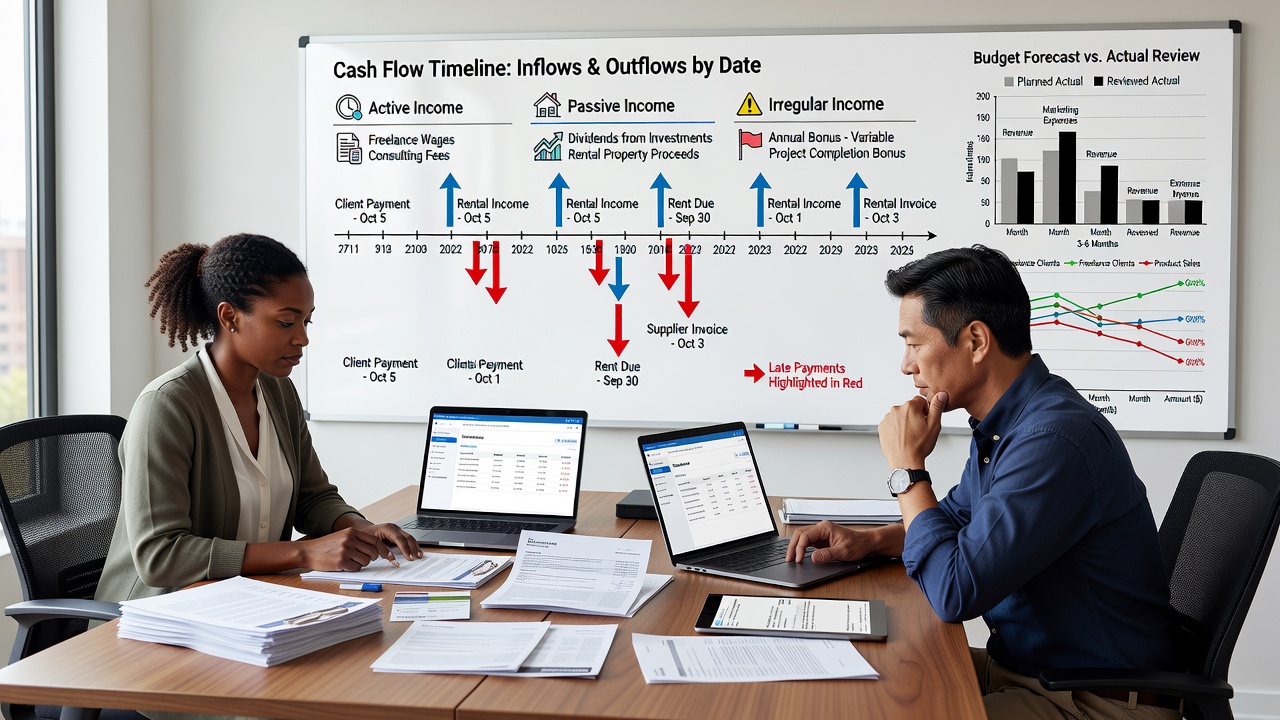
Sixty percent of small businesses that fail cite cash flow problems as a primary cause, even when their books show a profit on paper. That gap between "profitable" and "solvent" trips up individuals and companies alike. A financial review closes that gap. It forces you to look past the abstract number at the bottom of a statement and examine the actual timing, source, and reliability of money coming in versus money going out.
Most people conduct a financial review only when something feels wrong - a shrinking bank balance, a missed payment, a nagging sense that income isn't matching effort. By then, the damage has usually started. A disciplined money review, done on a regular schedule rather than in crisis mode, catches problems while they're still cheap to fix. For those who enjoy learning through interactive scenarios rather than spreadsheets, some financial literacy platforms now use game-based simulations to teach cash flow timing; you can continue reading about one such approach and see how playful mechanics illustrate the same principles covered here.
This piece walks through a structured method for reviewing your finances: how to categorize income, how to track cash flow with precision, and how to turn the findings into decisions rather than just observations.
Why a Financial Review Matters More Than a Budget
A budget is a forecast. A financial review is an audit of what actually happened. The two serve different purposes, and confusing them is one of the most common reasons people feel blindsided by their own finances.
The Difference Between Planning and Reviewing
Planning asks: what do I expect to earn and spend? Reviewing asks: what did I actually earn and spend, and why does it differ from the plan? Without the second question, budgets drift into fiction. A financial review is the corrective mechanism that keeps forecasts honest.
What Happens When Reviews Are Skipped
Skipping regular reviews doesn't cause immediate failure - it causes slow erosion. Subscription fees creep up unnoticed. A client starts paying late without anyone flagging it. Small leaks compound into structural problems over a year or two, and by the time someone looks closely, the fixes are harder and more expensive.
Who Needs This Discipline Most
Freelancers and small business owners with variable income need it most urgently, since their money coming in fluctuates month to month. But salaried employees managing debt, savings goals, or a household budget benefit just as much - irregular expenses can distort even a stable paycheck's usefulness.
- Freelancers and contractors with inconsistent client payments
- Small business owners managing payroll and overhead
- Households juggling multiple income streams or debt repayment
- Anyone planning a major purchase or life transition
Gathering the Right Financial Data
A review is only as good as the data behind it. Before analyzing anything, you need a complete and accurate record of every transaction over the review period - typically one to three months for a first pass, extending to a full year for annual planning.
Sources of Financial Records
Bank statements, credit card statements, invoicing platforms, and payroll records form the backbone. If you accept cash payments or run a side business, those transactions need manual logging since they won't appear automatically anywhere.
Reconciling Multiple Accounts
Most people have money scattered across checking accounts, savings accounts, and possibly a business account. A proper review consolidates all of them into one view. Missing an account doesn't just create a blind spot - it can make your cash flow review dangerously misleading, since transfers between accounts might get double-counted or ignored entirely.
Setting a Consistent Time Frame
Comparing a 30-day period against a 45-day period produces distorted conclusions. Fix your window - monthly, quarterly, or annually - and stick to it every time you repeat the process. Consistency here is what makes trend analysis meaningful later.
Income Analysis: Understanding Where Money Comes From
Income analysis goes beyond adding up deposits. It categorizes each source, evaluates its reliability, and identifies which streams are growing, shrinking, or disappearing.
Categorizing Income Streams
Separate active income (salary, hourly wages, freelance invoices) from passive income (dividends, rental payments, royalties). This distinction matters because passive streams tend to be more stable but slower to grow, while active income can spike or vanish depending on hours worked or contracts signed.
Evaluating Income Reliability
Not all money coming in carries equal weight. A salaried paycheck arriving on the same date every two weeks is far more dependable than a client invoice that gets paid "sometime within 60 days." Rank your income sources by predictability, not just size - a smaller, reliable stream often matters more for planning than a larger, erratic one.
Spotting Trends Over Time
Line up three to six months of income side by side. Is a particular client or revenue stream declining? Is seasonal work masking a deeper problem in the off-season? Trend visibility is one of the clearest advantages of doing this analysis regularly instead of glancing at a single month in isolation.
- Active income: wages, freelance fees, commissions
- Passive income: dividends, interest, rental income
- Irregular income: bonuses, gifts, tax refunds
Conducting a Cash Flow Review
Income analysis tells you what came in. A cash flow review tells you when it came in relative to when money went out - and timing is where most financial stress actually originates.
Mapping Inflows Against Outflows
Lay out every inflow and outflow by date, not just by category. A person can have healthy total income and still bounce a payment because rent is due on the 1st while their largest client pays on the 15th. This timing mismatch is invisible in a simple income-versus-expenses summary but glaring in a proper cash flow map.
Identifying Cash Flow Gaps
A gap appears whenever outflows are scheduled before the corresponding inflows arrive. These gaps force people into overdrafts, credit card float, or late payment penalties - costs that a good cash flow review can prevent by flagging the mismatch weeks in advance.
Building a Buffer Strategy
Once gaps are identified, the fix is usually structural: negotiate different payment terms, build a cash reserve equal to the size of the largest recurring gap, or shift billing cycles to align better with expense due dates. None of these solutions are visible until the review exposes the underlying timing problem.
Turning Review Findings Into Action
A financial review that ends in a spreadsheet and nothing else is wasted effort. The value comes from the decisions made afterward.
Adjusting Spending Based on Real Data
If the review shows a category - subscriptions, dining, supplies - consistently exceeding what you'd assumed, that's a direct cue to renegotiate, cancel, or cap it. Decisions grounded in actual review data are far more durable than resolutions made from guesswork.
Renegotiating Payment Terms
If clients or vendors consistently create timing gaps, approach them directly. Asking for a deposit upfront, shortening invoice terms from 60 to 30 days, or shifting a recurring bill's due date can resolve a cash flow gap without changing your total income at all.
Setting a Recurring Review Schedule
A single review is a snapshot. A recurring one - monthly for cash flow, quarterly for full income analysis - becomes a system. Set calendar reminders and treat the review with the same seriousness as paying a bill; skipping it defeats the entire purpose.
Common Mistakes to Avoid
Even careful people fall into predictable traps when reviewing their finances. Recognizing these patterns in advance saves time and prevents faulty conclusions.
Confusing Profit With Cash on Hand
A business or individual can show a profit on paper while having no usable cash, simply because invoices haven't been collected yet. Reviews must separate accrued income from collected income to avoid this confusion.
Ignoring Irregular or One-Time Income
Treating a one-time bonus or tax refund as part of regular money coming in inflates expectations for future months. Flag irregular income separately so it doesn't distort your baseline.
Reviewing Too Infrequently
Waiting a full year to review finances means problems that started in month two go unnoticed until month twelve. Shorter, more frequent reviews catch issues while they're still minor and inexpensive to correct.
Frequently Asked Questions
How often should I conduct a financial review?
Monthly reviews work best for tracking cash flow and catching timing issues early. A deeper income analysis, examining trends and sources over several months, is useful quarterly. Annual reviews should focus on big-picture goals like savings rate and debt reduction.
What tools do I actually need to do this properly?
A spreadsheet and access to your bank and credit card statements are sufficient to start. Dedicated accounting or budgeting software helps automate categorization once your transaction volume grows, but the method matters more than the tool.
How do I know if my cash flow gap is serious?
Compare the size of the gap to your available cash reserve. If covering the gap requires borrowing, overdrafting, or delaying a payment to someone else, it's serious enough to require a structural fix rather than a one-time patch.
Should freelancers track income differently than salaried employees?
Yes. Freelancers should track income by invoice date, payment date, and client, since reliability varies significantly between clients. Salaried employees can rely on a simpler structure since their money coming in is fixed and scheduled.
Can a financial review help with long-term goals like buying a home?
Yes. A consistent review builds the historical income and expense data lenders and financial planners need to assess affordability. It also reveals whether your current cash flow can absorb a larger fixed payment before you commit to one.
What's the first step if I've never done a financial review before?
Start by gathering three months of bank and credit card statements and listing every inflow and outflow by date. Don't categorize or judge anything yet - just get the raw data assembled before moving into analysis.