
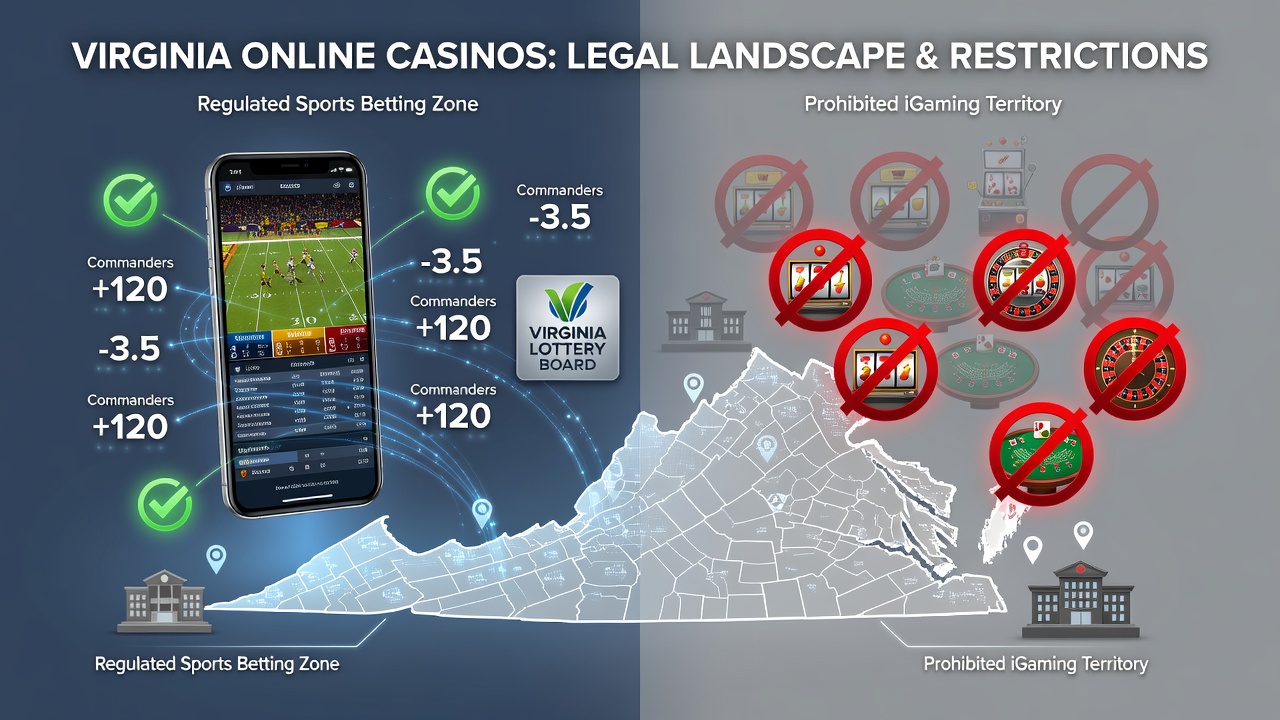
Virginia legalized sports betting in 2020, yet a full slate of regulated online casino gambling - the kind with slots, blackjack, and live dealer tables - remains absent from state law. That gap surprises a lot of residents who assume that because they can bet on the Commanders from their phone, they must also be able to spin a digital roulette wheel. They can't, at least not through a licensed Virginia operator. This distinction between sports wagering and casino gaming sits at the center of nearly every conversation about virginia online casinos, and understanding it is the first step toward gambling responsibly and legally in the Commonwealth.
Plenty of Virginians still play online casino games daily, using offshore platforms or sweepstakes-style sites that operate in a legal gray zone. Some of these platforms mimic real-money experiences closely, offering titles that look and feel like the ones found in Atlantic City or Las Vegas. Games styled after physical arcade attractions have also crossed over into this space; you can find digital versions of the ball-drop concept, such as plunko pin, replicated as slot-style titles on sweepstakes platforms. That crossover illustrates how demand for casino-style entertainment persists even without a regulated market, and it's exactly why so many residents search for clarity on what's actually permitted.
This guide breaks down the current legal landscape, explains what "legal" actually means in this context, and gives you a practical framework for evaluating any platform before you deposit a dollar.
Understanding the Legal Status of Online Casinos in Virginia
What Virginia Law Currently Permits
Virginia's gambling statutes draw a firm line between sports betting and casino-style gaming. The 2020 legislation that opened the door to mobile sportsbooks - operators offering point spreads, moneylines, and prop bets - did not extend to slot machines, table games, or poker played against a house dealer online. Retail casinos exist in select cities under a separate framework approved by voters, but those are physical, brick-and-mortar operations, not digital platforms accessible from a phone or laptop anywhere in the state.
Why There's No Regulated Legal Online Casino Virginia Market Yet
Lawmakers in Richmond have debated iGaming expansion multiple times, but each attempt has stalled amid concerns about cannibalizing revenue from the newly built retail casinos and unresolved questions about problem gambling safeguards. Neighboring states like Pennsylvania, New Jersey, and Michigan moved faster, creating regulated markets years ago, but Virginia's legislature has taken a more cautious, incremental approach. Until a bill passes both chambers and receives the governor's signature, a fully legal online casino virginia market simply does not exist.
The Role of Tribal and Sweepstakes Platforms
In the absence of state-regulated iGaming, sweepstakes casinos and social gaming platforms have filled part of the void. These sites use a dual-currency model - free virtual coins alongside a secondary currency that can sometimes be redeemed for cash prizes - structured to comply with sweepstakes law rather than traditional gambling statutes. They are not the same as licensed casinos, and players should understand that consumer protections differ significantly.
- Sports betting: fully legal and regulated since January 2021
- Retail casino gaming: legal in specific approved cities
- Online casino gaming (slots, table games): not yet regulated statewide
- Sweepstakes-style platforms: operate under separate legal framework, not classified as traditional gambling
Virginia iGaming Laws Explained
How the Legislative Process Has Unfolded
Virginia's approach to gambling expansion has been methodical. The Virginia Lottery Board regulates sports betting operators, issuing licenses and enforcing advertising standards, responsible gambling requirements, and financial reporting. Casino gaming, by contrast, required a constitutional-style referendum process at the local level, city by city, before any physical casino could break ground. iGaming legislation has been introduced in recent General Assembly sessions but has not cleared the finish line, often dying in committee or getting tabled for further study.
Key Regulatory Bodies Overseeing Gambling in the State
The Virginia Lottery serves as the primary regulator for both the lottery and sports betting industries. Any future online casino framework would likely fall under this same body, given its existing infrastructure for licensing, auditing, and consumer complaint resolution. Understanding which agency holds authority matters because it tells you where to verify licensing claims made by any operator advertising to Virginia residents.
What Legalization Would Likely Require
Based on how neighboring states structured their iGaming laws, a Virginia framework would probably include licensing fees for operators, a tax rate on gross gaming revenue, mandatory partnerships with existing casino license holders, and strict age and identity verification protocols. It would also likely mandate self-exclusion programs and deposit limit tools, mirroring the responsible gambling provisions already built into the sports betting law.
Timeline Expectations for Future Legislation
Predicting exact dates is speculative, but the pattern in other states suggests that once a state legalizes sports betting and retail casinos, iGaming legislation tends to follow within several years as lawmakers observe tax revenue in comparable jurisdictions. Virginia's legislature reconvenes annually, and iGaming bills have appeared with increasing frequency, suggesting sustained interest even without a firm passage date.
Where Virginians Currently Play: Offshore and Sweepstakes Options
Offshore Casino Sites: Risks and Realities
Some Virginia residents use offshore online casinos licensed in jurisdictions like Curaçao or Malta. These sites operate outside U.S. regulatory oversight, meaning there's no state agency to intervene if a dispute arises over withheld winnings or account closures. Payment processing can be unreliable, and customer support is often inconsistent. Playing on these platforms carries real financial and legal ambiguity that a regulated market would eliminate.
Sweepstakes Casinos as a Legal Alternative
Sweepstakes casinos represent the most common way Virginians currently access slot-style and table-style games without running afoul of state law. These platforms award virtual currency through purchase or free entry methods, sidestepping traditional gambling classification. Game variety on these sites has grown substantially, ranging from classic three-reel slots to elaborate bonus-round titles and arcade-inspired formats.
Evaluating Platform Legitimacy Before You Play
Not every sweepstakes site operates with the same integrity. Look for transparent terms of service, clear redemption policies, and a track record of honoring payouts. Reading independent reviews and checking for consistent player feedback across multiple sources helps separate reputable platforms from short-lived operations designed to collect deposits and disappear.
How to Choose the Best Casinos Virginia Residents Can Trust
Licensing and Transparency Standards
Whether you're evaluating a sweepstakes platform or a sportsbook with casino-adjacent features, licensing transparency matters. Legitimate operators publish their regulatory information clearly, list the jurisdiction issuing their license, and provide accessible contact information for support and complaints. Vague or missing licensing details are an immediate red flag.
Game Variety and Software Providers
Reputable platforms partner with established software developers whose games undergo independent testing for fairness. When comparing best casinos virginia players recommend within the sweepstakes space, pay attention to which studios supply the games - established providers tend to offer verified random number generation and consistent payout structures compared to unknown or unlicensed developers.
Payment Security and Withdrawal Speed
Fast, transparent withdrawal processes separate trustworthy platforms from questionable ones. Look for sites that clearly state processing times, accept established payment methods, and don't bury withdrawal restrictions in fine print. A platform that makes deposits instant but withdrawals sluggish or conditional deserves scrutiny.
Customer Support Quality
Responsive support channels - live chat, email, or phone - indicate an operator invested in long-term player relationships rather than short-term deposit volume. Test a platform's support responsiveness with a simple question before committing significant funds.
Responsible Gambling Considerations for Virginia Players
Recognizing Warning Signs
Chasing losses, gambling with money earmarked for essentials, and hiding gambling activity from family members are established indicators of problematic behavior. These warning signs apply equally whether someone is betting on sports, playing sweepstakes casino games, or using offshore platforms.
Available Support Resources
The Virginia Council on Problem Gambling offers a confidential helpline and referral services for residents seeking support. Licensed sports betting operators in the state are required to display this information prominently, and the same standard would likely extend to any future regulated iGaming market.
Setting Personal Limits
Even on unregulated platforms, players can impose their own boundaries - setting a strict budget, using calendar reminders to limit session frequency, and avoiding platforms that make self-exclusion difficult. These habits matter more in Virginia's current environment precisely because state-mandated protections don't yet cover casino-style gaming.
The Future Outlook for Virginia Online Casinos
Lessons From Neighboring States
Pennsylvania and New Jersey generate substantial tax revenue from regulated iGaming, often exceeding projections made before launch. Virginia lawmakers have taken note, and revenue comparisons from these states frequently surface during General Assembly debates as arguments for moving forward with legalization.
Arguments For and Against Expansion
Proponents argue that regulation would bring existing offshore and sweepstakes activity into a taxed, consumer-protected framework, generating revenue currently lost to unregulated operators. Opponents worry about market saturation given the state's relatively young retail casino industry and concerns that online access could increase problem gambling rates among residents who wouldn't otherwise visit a physical casino.
What to Watch For in Upcoming Legislative Sessions
Bills addressing iGaming tend to surface early in each General Assembly session. Following committee assignments and public testimony schedules gives interested residents the clearest signal of whether a legal online casino virginia market might finally take shape in the near term.
Frequently Asked Questions
Is it illegal for me to play at an offshore online casino from Virginia?
Virginia law does not explicitly criminalize individual players for using offshore casino sites, but these platforms operate without state licensing or oversight, meaning you have limited legal recourse if problems arise. The safer path is sticking to legal sports betting apps or vetted sweepstakes platforms until a regulated iGaming market exists.
Can I play real-money slots online legally in Virginia right now?
Not through a Virginia-licensed operator, since the state hasn't passed iGaming legislation covering slots or table games. Sweepstakes casinos offer a legal alternative using virtual currency systems, though the experience and payout structure differ from traditional real-money gambling.
How is Virginia's approach different from states like New Jersey?
New Jersey passed comprehensive iGaming legislation years ago, creating a licensed market with dozens of regulated casino apps. Virginia has only legalized sports betting and retail casinos so far, leaving online casino gaming in a regulatory gap that neighboring states closed long ago.
Are sweepstakes casinos the same as legal online casinos?
No. Sweepstakes casinos operate under promotional sweepstakes law rather than gambling regulation, using a dual-currency system to remain compliant. They offer casino-style entertainment but lack the same licensing structure, oversight, and consumer protections a fully regulated online casino would provide.
Will Virginia legalize online casinos soon?
There's no confirmed timeline, but iGaming bills have appeared in recent legislative sessions, and revenue data from neighboring states continues to fuel the debate. Tracking General Assembly activity each January offers the clearest indication of momentum toward legalization.
What should I check before trusting a casino-style platform advertising to Virginia residents?
Verify the operator's licensing jurisdiction, read independent player reviews, and confirm clear withdrawal terms before depositing any money. Platforms that hide licensing details or delay payouts without explanation should be avoided regardless of how polished their marketing appears.