
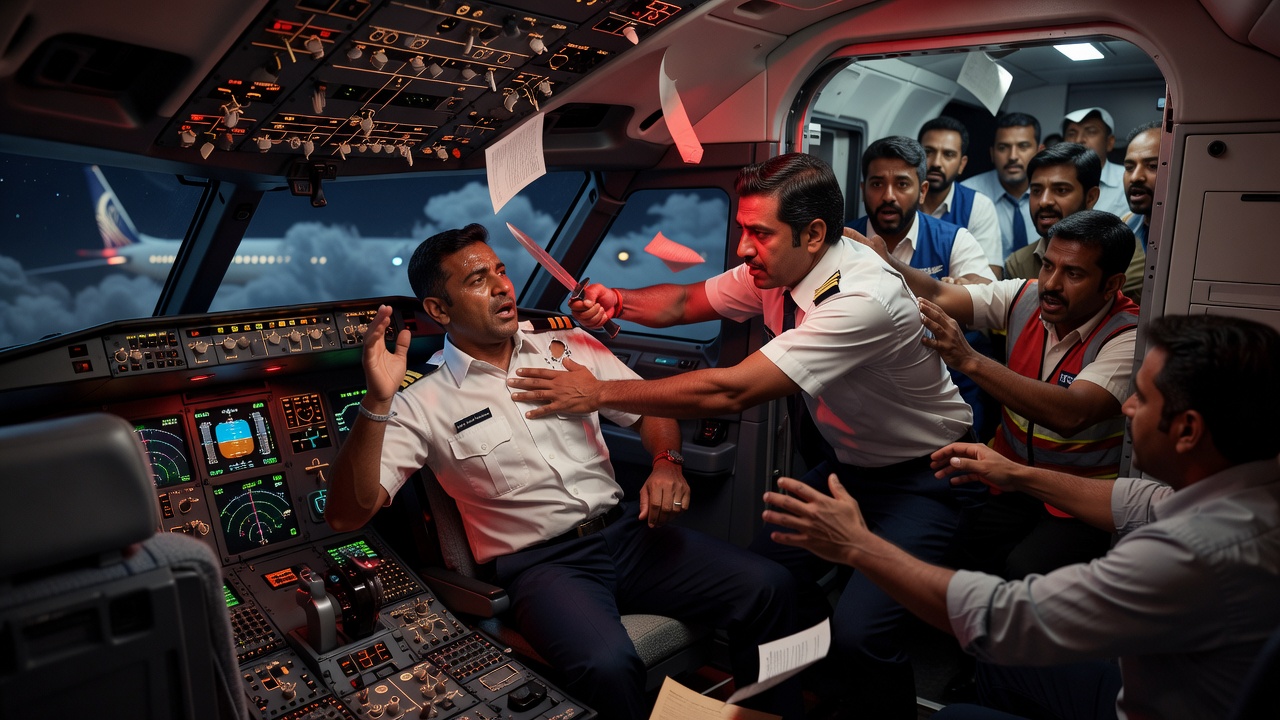
A midair stabbing aboard a Flydubai flight bound for Tel Aviv has moved from an isolated security incident to a matter drawing cross-border political attention. An Israeli official has publicly referenced alleged details about the online activity of the Omani co-pilot accused of attacking Indian Captain Smit Machchhar, introducing claims that investigators have not yet confirmed through official channels.
The attack reportedly unfolded in the cockpit before passengers and crew managed to intervene, preventing further harm and allowing the aircraft to continue its journey safely. That intervention is now a secondary story to a more consequential question: what, if anything, in the co-pilot's background signalled intent before he boarded the flight.
What Investigators Are Actually Examining
Aviation security inquiries of this kind typically run on parallel tracks. One track is procedural - airline hiring protocols, psychological screening, access controls to the cockpit, and whether existing safeguards functioned as designed. The other is intelligence-driven, focused on the individual's digital footprint, associations, and any history of expressed grievance or ideological shift. Claims about social media activity sit squarely in that second track, and they carry weight precisely because they are difficult to verify quickly or independently.
When a government official, rather than an airline or aviation regulator, is the source of such claims, the story inevitably picks up a political dimension. That does not make the underlying allegations false, but it does mean they arrive filtered through a national security lens rather than a purely investigative one. Readers and newsrooms alike should treat unverified specifics - alleged radicalisation, claimed terrorist intent, specific online content - as allegations pending confirmation, not established fact.
Why Cockpit Security Protocols Matter Here
Commercial aviation has spent decades building layered defences against exactly this scenario: reinforced cockpit doors, two-person cockpit rules in many jurisdictions, background vetting for flight crew, and rapid-response training for cabin staff. That a captain was reportedly attacked by his own co-pilot, rather than an external actor, exposes a different vulnerability - one that screening at the point of hiring, not airport security, is meant to catch.
This is the uncomfortable core of the story for airlines and regulators. Perimeter security cannot stop a threat that originates inside the flight deck. That reality pushes attention toward recruitment vetting, ongoing psychological evaluation, and how carriers monitor for behavioural changes in long-serving staff - areas that are harder to regulate consistently across international crews and multiple jurisdictions.
The Risk of Getting Ahead of the Facts
Incidents involving alleged terrorism, nationality, and religion move quickly from aviation safety story to geopolitical flashpoint. Omani and Indian nationals, an Israeli-bound flight, and now an Israeli official's public claims create a narrative that can outpace the formal investigation. Official bodies - Flydubai, UAE aviation authorities, and any state conducting a criminal probe - will need time to establish motive, mental state, and whether any online activity genuinely indicates premeditation or radicalisation, as opposed to being incidental or misattributed.
Until a formal investigative body confirms specifics, the responsible approach is to report what is known: an alleged stabbing occurred, a captain was injured, intervention prevented escalation, and competing claims about motive are now circulating. Separating confirmed fact from asserted claim is not a technicality - it is the difference between informing the public and amplifying unverified allegations in a case with serious diplomatic and security implications.