
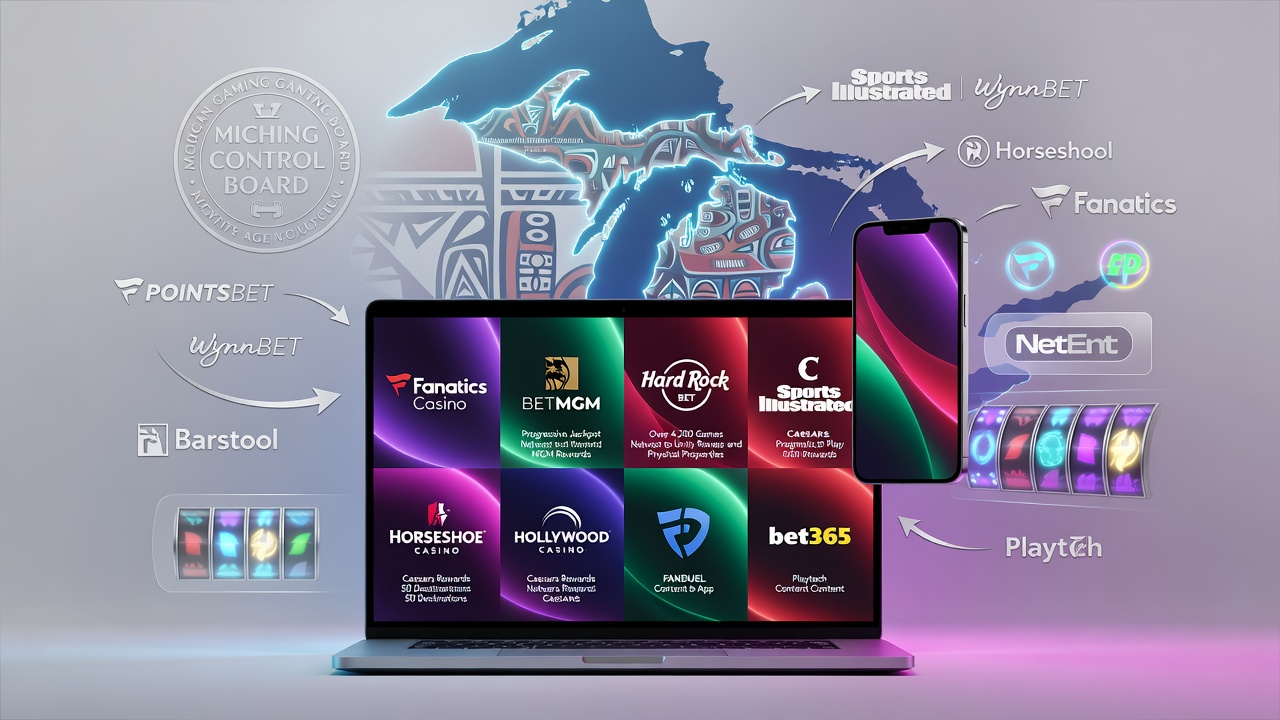
Michigan's regulated online casino market now includes eight major platforms, each operating under oversight from the Michigan Gaming Control Board. The lineup - Fanatics, BetMGM, Hard Rock Bet, Caesars, Horseshoe, Hollywood, FanDuel and bet365 - reflects a market that has seen significant turnover since legal online wagering began, with licenses changing hands, brands rebranding and new operators arriving as recently as this spring.
A Market Shaped by Acquisition and Rebranding
What looks like a stable list of eight names actually represents several rounds of corporate consolidation. Fanatics Casino exists because the company acquired PointsBet's U.S. operations, migrating existing customer accounts and responsible-gaming settings in the process. Horseshoe Casino replaced WynnBET after Caesars Entertainment took over that license through its tribal partnership with the Sault Ste. Marie Tribe of Chippewa Indians. Hollywood Casino went through its own transition when PENN Entertainment ended its Barstool partnership, initially folding the product into ESPN BET before launching a standalone app in 2025. Hard Rock Bet is the newest arrival among the established group, taking over the license previously held by Sports Illustrated Casino in partnership with the Hannahville Indian Community's Island Resort Casino.
This pattern of licenses transferring between operators is common in regulated U.S. online gambling markets. Tribal gaming compacts, platform partnerships and corporate acquisitions mean the brand a player signed up with years ago may not be the one managing their account today. Regulators require that account balances, verification records and self-exclusion status carry over cleanly during these transitions - a compliance obligation that protects consumers but adds operational complexity for operators.
Game Libraries, Loyalty Programs and Competitive Differentiation
With eight licensed platforms competing for the same pool of Michigan players, differentiation increasingly comes down to game variety, software partnerships and loyalty infrastructure rather than price, since regulated casino games operate on fixed house-edge mathematics regardless of operator.
- BetMGM maintains one of the largest game libraries in the state, including an exclusive progressive jackpot network and integration with the MGM Rewards program.
- Hard Rock Bet launched with more than 4,200 games and ties online play to benefits at its physical casino properties through Unity Rewards.
- Horseshoe automatically enrolls players in Caesars Rewards, connecting online activity to more than 50 destinations nationwide.
- bet365, which launched in April 2026, relies heavily on Playtech content, offering an alternative to the NetEnt and Pragmatic Play titles that dominate most competing platforms.
Software diversity matters more than it might appear. A market dominated by two or three content providers reduces variety and can concentrate technical risk if a single studio experiences outages or compliance issues. The entry of operators leaning on different providers, such as bet365's Playtech-heavy catalog, gives Michigan players genuine variety in game mechanics and volatility profiles rather than repackaged versions of the same titles.
Bonus Structures and the Regulatory Guardrails Behind Them
Welcome offers across these platforms vary in structure - deposit matches, no-deposit credits, tiered spin packages - but all operate under Michigan Gaming Control Board rules requiring clear disclosure of wagering requirements. Horseshoe's 1x playthrough requirement on slot winnings, for instance, is notably lower than many national standards, while other platforms use multi-stage spin releases tied to login activity over several weeks.
These mechanics are promotional tools designed to drive deposits and engagement, not indicators that a platform offers better odds or improved long-term outcomes for players. Bonus funds still carry terms, expiration windows and eligible-game restrictions. Regulators require this information be presented transparently, but the responsibility to read and understand those terms rests with the player.
Consumer Protection Remains the Regulatory Backbone
Every operator on this list functions under the same baseline requirements: encrypted data handling, mandatory age verification, self-exclusion tools and deposit-limit options. The Michigan Gaming Control Board's licensing structure means only vetted operators - often partnered with tribal gaming authorities or commercial casino licensees - can legally offer real-money casino games to residents.
That regulatory layer matters more as the market grows crowded. More operators competing for attention typically means more aggressive marketing and bonus promotion, which increases the importance of responsible-gambling infrastructure. Players showing signs of problematic behavior have access to self-exclusion programs and deposit controls across all licensed platforms, and support resources are required to be visible and accessible, not buried in terms and conditions.