
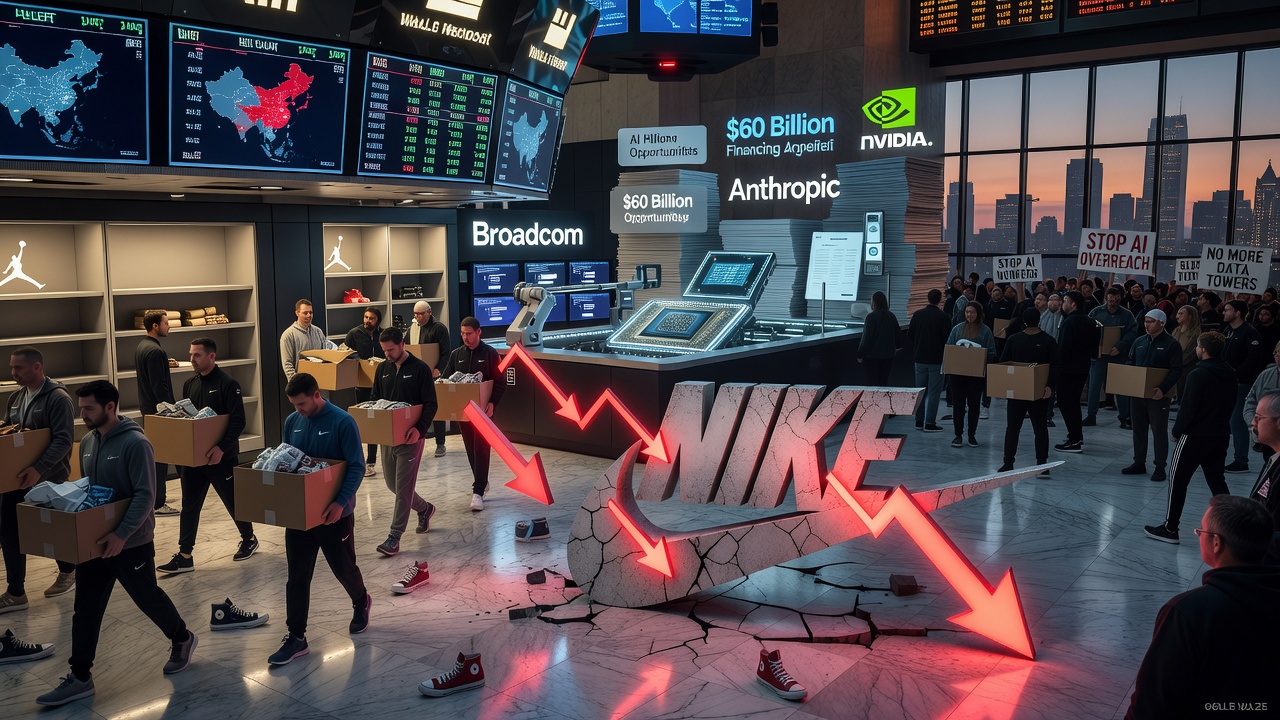
Nike shares fell as much as 9.7% in New York trading as the company confirmed it will cut jobs and restructure operations in an effort to save $2.5 billion over the next five years. The move follows a weaker-than-expected quarterly report and a fiscal 2027 outlook that points to a high-single-digit revenue decline, far steeper than the 2.4% drop analysts had modeled. The scale of the miss has intensified scrutiny of chief executive Elliott Hill, now in his third year steering the company through a prolonged slump.
Where the Turnaround Is Breaking Down
Nike's troubles are not confined to one region or product line. Sales in China have declined steadily, a market that once anchored the company's growth story. Management has also flagged sportswear and the Jordan brand as areas needing at least another year of work before results stabilize. Analysts covering the stock point to execution problems that predate the current leadership: product development missteps left Nike carrying excess inventory, a backlog it has spent roughly two years working through. Meanwhile, competition has intensified from rivals gaining visibility through sponsorships and cultural moments Nike once dominated.
The company's Converse division adds another layer of difficulty. Its performance has leaned heavily on a single legacy product, the Chuck Taylor All Star, with limited innovation beyond it. A recent advertising campaign drew criticism for imagery some viewers associated with the Ku Klux Klan, prompting a temporary pause in the ad and further reputational strain at a moment the brand can least afford it.
Broadcom and the Expanding AI Financing Machine
Separately, Broadcom shares moved on reports that its Wall Street syndicate is assembling roughly $60 billion in fresh financing tied to AI chip deployment, with Anthropic among the beneficiaries. The arrangement has reportedly been in development for weeks and is being watched closely as a signal of whether capital markets remain willing to fund AI infrastructure amid growing public pushback over data center construction and its local costs. Broadcom is positioning itself to sell more chips and supporting data center equipment, pressing further into territory long dominated by Nvidia. The financing adds to an already substantial pile of debt raised across the industry to build out AI capacity, underscoring how dependent the sector's growth narrative has become on continued credit access rather than cash flow alone.
FICO Gains Amid Housing Finance Policy Shift
Fair Isaac Corp., known by its FICO ticker, saw shares rise after launching its Mortgage Direct License Program. The stock's move also followed signals from Federal Housing Finance Agency director Bill Pulte suggesting he was not specifically targeting the company, despite the agency reportedly preparing to direct Fannie Mae and Freddie Mac to require lenders to pull credit data from two bureaus instead of three. Pulte has repeatedly pressed credit bureaus and FICO to lower fees in an effort to reduce loan closing costs, part of the administration's broader push on housing affordability. The policy direction remains unsettled, and further details could emerge as Pulte addresses a mortgage industry conference.
What It Means for Investors
- Nike's cost-cutting signals deeper structural problems than a single weak quarter, with China, Jordan, and sportswear all requiring sustained repair.
- Broadcom's financing push reflects how AI infrastructure growth increasingly relies on large-scale debt arrangements rather than organic revenue.
- FICO's regulatory exposure shows how federal housing policy can directly move shares of companies embedded in mortgage underwriting.